
Concepts: Explain the fundamental principles of OOP: classes as blueprints and objects as instances of those blueprints. Introduce constructors for initializing new objects.
What is OOP?
OOP stands for Object-Oriented Programming. Object-oriented programming is about creating objects that contain both data and methods.
Advantages of OOP
OOP is faster and easier to execute
OOP provides a clear structure for the programs
OOP makes applications code reusable
Classes and Objects
Classes and objects are the two main aspects of object-oriented programming.
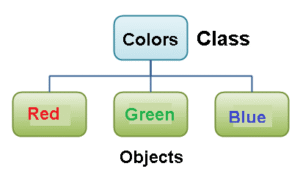
Code example:
// The blueprint (class)
class Dog {
String name;
int age;
// Constructor
public Dog(String name, int age) {
this.name = name;
this.age = age;
}
// A method
void bark() {
System.out.println(“Woof!”);
}
}
// Creating and using the object
public class MyPet {
public static void main(String[] args) {
Dog myDog = new Dog(“Buddy”, 5);
System.out.println(myDog.name + ” is ” + myDog.age + ” years old.”);
myDog.bark();
}
}
Quiz: Distinguish between a class and an object and understand the purpose of a constructor.
